

There are more than 11,000 ANPR cameras operating across the UK right now, reading number plates, timestamping them, and firing that data into a centralised police database. Every motorway gantry, most A-road junctions, and a growing number of council-run sites are feeding a system that logs your movements whether you’re a suspect or not. I’ve spent a fair amount of time reading the College of Policing’s code of practice and the associated data audit trails, and what’s in there is genuinely worth unpacking for anyone who cares about surveillance architecture.
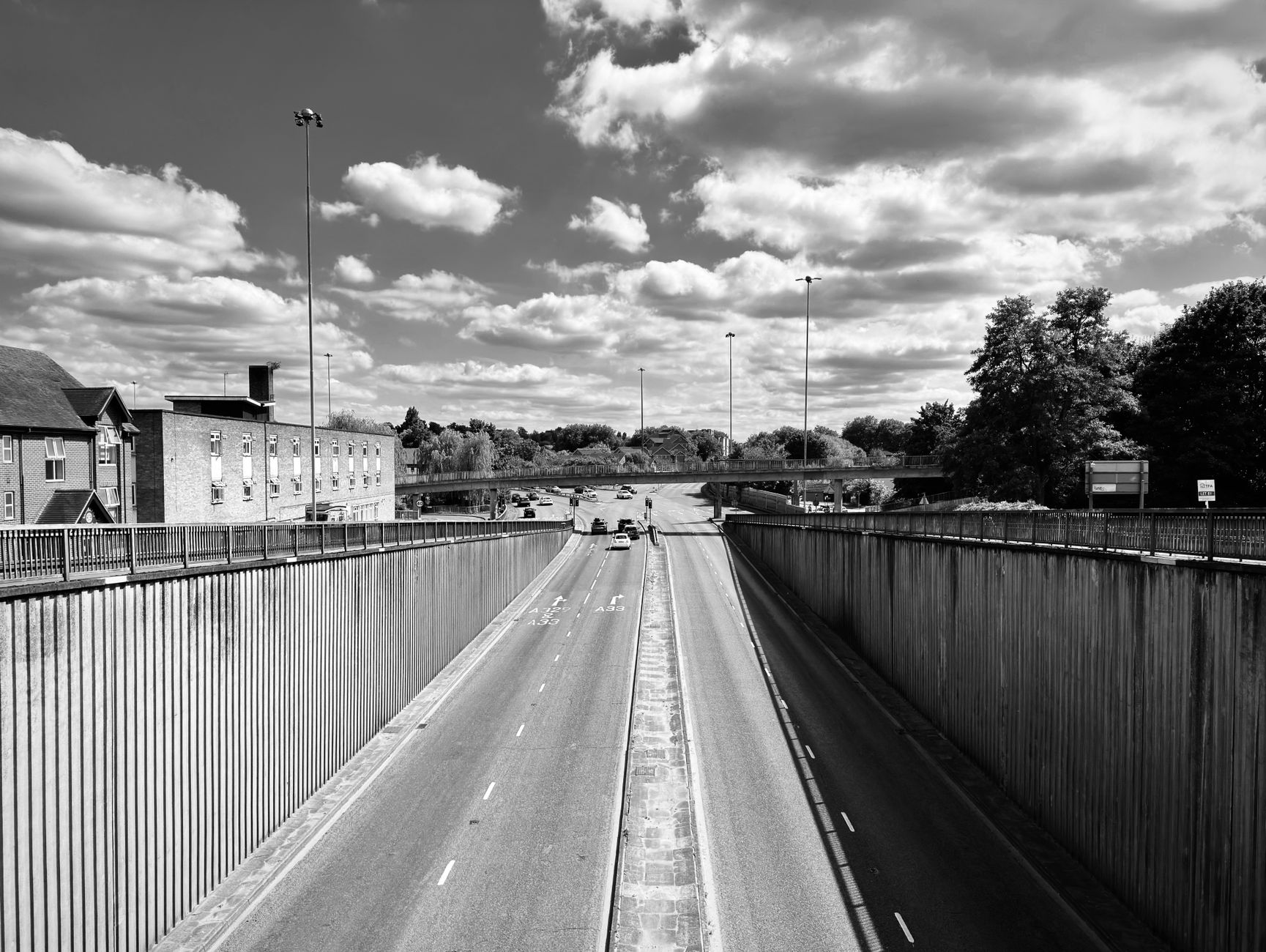
The system is called the National ANPR Data Centre (NADC), and it sits under the NPCC (National Police Chiefs’ Council) rather than any single force. The technical read pipeline is straightforward in principle: a camera captures a plate, optical character recognition resolves it to a string, and the read (plate number, timestamp, GPS coordinates, camera ID, direction of travel, and a JPEG of the vehicle) gets pushed over an encrypted connection to a regional aggregation node, which forwards to the national store. The whole journey from shutter to searchable record takes roughly two to three seconds. At scale, the NADC processes somewhere north of 60 million reads per day. That’s not speculation, NPCC has stated figures in that range in parliamentary submissions.
Who actually has access to ANPR query rights?
The access model is tiered. Every UK police force gets read access, obviously. But the list goes further than most people realise. The National Crime Agency, Border Force, HMRC’s fraud and serious crime teams, the Driver and Vehicle Licensing Agency for specific enforcement purposes, and certain military police units all hold approved query rights under the current framework. Intelligence agencies can access the data under the Intelligence Services Act, though the precise mechanics of that pathway aren’t documented publicly in any granular way.
At the operational level, a PC on patrol can run a plate through the Police National Computer and get an ANPR hit response without touching the NADC directly. Detectives investigating serious crime submit retrospective queries, “show me every read of this plate in the last 90 days”, through a structured request process that’s supposed to be logged and audited. The audit trail is real, but the oversight is patchy. The Surveillance Camera Commissioner’s office has noted repeatedly that self-auditing by forces is inconsistent, and there’s no independent real-time monitoring of query patterns.
How ANPR retention periods actually work
Under the College of Policing’s ANPR code of practice, standard retention is two years for reads that don’t match a vehicle of interest, and indefinite retention where the read is linked to a crime record. The two-year baseline sounds reasonable until you think about what it means in practice: your full movement history, every motorway service station, every town centre, every late-night drive, sits queryable for 730 days by anyone with the right credentials and a plausible operational reason.

The “vehicle of interest” flag is where it gets complicated. A plate can be flagged against the Police National Computer for unpaid insurance, an expired MOT, or a simple keying error in a legacy database. Once flagged, reads don’t age out under the standard two-year window. I’ve read cases where vehicles were cleared of any offence but remained flagged in PNC for months, meaning ANPR reads continued accumulating on an extended retention schedule without the owner ever knowing. The ICO has received complaints about this, though enforcement action against specific forces remains rare.
There’s also the question of what “deletion” actually means. Marked-for-deletion records in large distributed systems frequently persist in backup stores, cold storage, and analytic extract databases long after the headline retention window expires. The NADC’s data governance documentation doesn’t address this in any detail the public can access. The Home Office’s responses to Freedom of Information requests on backup purge cycles have been consistently refused under section 31 (law enforcement). Draw your own conclusions.
The civil liberties attack surface
The legal basis for bulk ANPR collection is the Police Act 1997 combined with the Investigatory Powers Act 2016, with RIPA-era precedents still baked into how forces justify retrospective queries. The problem is that neither statute was written with mass passive surveillance of innocent people in mind. Every single vehicle that passes an ANPR camera gets logged, there’s no threshold, no reasonable suspicion requirement for the initial capture. This is fundamentally different from a targeted intercept and the legal framework hasn’t quite caught up with what the technology actually does.
Civil liberties groups including Liberty and Big Brother Watch have been arguing this point for years. The European Court of Human Rights has found against blanket surveillance schemes in analogous contexts, but ANPR sits in a legal grey area because each individual read is framed as trivial. One plate read, by itself, reveals almost nothing. Two years of reads on a single vehicle reveals your GP, your lawyer, your political meetings, your religious practice, and your relationships. The aggregation is the problem, and current law treats it as if it were the same as a single read.
This aggregation risk is directly comparable to what we’ve covered before with electoral roll data flowing into commercial broker pipelines, individually mundane data points becoming a surveillance profile once they’re combined and queried at scale. The difference with ANPR is that the state is doing the aggregating directly, rather than outsourcing it to data brokers.
Scope creep and third-party access
Here’s where it gets thornier. Local councils now operate significant numbers of ANPR cameras for clean air zone enforcement and parking management. Some of these feeds are integrated into police networks under data sharing agreements; others sit in separate silos but are accessible under section 22 data requests. The boundary between council ANPR for traffic management and police ANPR for surveillance is genuinely blurry at the infrastructure level, and the public-facing transparency about which feeds go where is minimal.
Insurance companies had partial access to ANPR data through the Motor Insurers’ Bureau for enforcement purposes, though the scope of that arrangement has been challenged. Private car park operators running their own ANPR systems sit entirely outside the College of Policing code but can be compelled to hand over footage under a production order. This fragmentation means there’s no single body with a complete picture of how ANPR data flows across public and private systems in the UK.
The comparison with how smart meter communication data gets handled by the DCC is useful here. Both systems collect granular behavioural data on the general population, both have retention frameworks that were written before the full surveillance implications were understood, and both rely heavily on self-auditing by the organisations that benefit from the data. The oversight model in both cases is structurally insufficient for the scale of intrusion involved.
For those building threat models around personal privacy, the honest answer is that short of avoiding motorway and A-road travel entirely, there’s no practical way to opt out of ANPR capture. Obfuscation techniques like altered plates are criminal offences under the Road Vehicles (Display of Registration Marks) Regulations 2001. The DVLA and police take a dim view of attempts to defeat ANPR, for obvious enforcement reasons. Your best lever is the right of subject access under UK GDPR, which theoretically entitles you to request what reads exist against your plate, though forces have been slow to build processes that make this practically usable. The ICO is the relevant regulator if forces ignore or stonewall a subject access request, though as with many civil liberties issues, the remedies are slow and the deterrent effect on bad practice is limited.
If you’re running any kind of operational security assessment for clients, the ANPR data trail is worth factoring into movement analysis. Tools that aggregate public and semi-public data have become increasingly capable; platforms like Nusan are part of a broader ecosystem where data visibility across multiple sources is becoming the norm for investigators and analysts alike. The same aggregation capability that makes these tools useful for legitimate research is exactly why the NADC’s query access controls need far more scrutiny than they currently get.
The UK’s ANPR network is impressive infrastructure, technically speaking. It’s also one of the most extensive passive surveillance systems operating on a civilian population anywhere in the world, running largely below public awareness with oversight mechanisms that haven’t scaled to match its reach. That gap is the real attack surface. Not the cameras themselves, but the institutional complacency about what two years of bulk movement data actually represents.
Leave a Reply